Updated By
The DieselTechWork Team covers pay, career paths, and hiring for diesel and heavy equipment mechanics. Pay and employment figures come from the U.S. Bureau of Labor Statistics Occupational Employment and Wage Statistics program. Living cost comparisons come from Bureau of Economic Analysis regional price data. Statistics about job listings, such as how often listings ask for a CDL, come from listings posted on DieselTechWork.
A heavy duty mechanic, often shortened to HD mechanic, repairs either large road trucks or off road machines such as excavators and bulldozers. Employers use the title for both jobs. You should read the equipment list in each posting. Typical pay is about $61,770 on trucks and about $65,510 on heavy equipment, based on May 2025 federal wage data.
Which Kind of Heavy Duty Job Is It?
You can tell the two jobs apart by what rolls into the shop. A truck job centers on engines, brakes and electrical systems. An equipment job centers on hydraulics, the fluid powered systems that move a loader arm or a dozer blade.
Compare | Trucks | Equipment |
|---|---|---|
Works On | Semis and buses | Dozers and loaders |
Lowest 10% | Under $44,530 | Under $46,820 |
Median Pay | $61,770 | $65,510 |
Highest 10% | Over $88,740 | Over $94,460 |
Job Growth | 4% | 7% |
Source: Bureau of Labor Statistics, May 2025 pay and 2025 to 2035 projections.
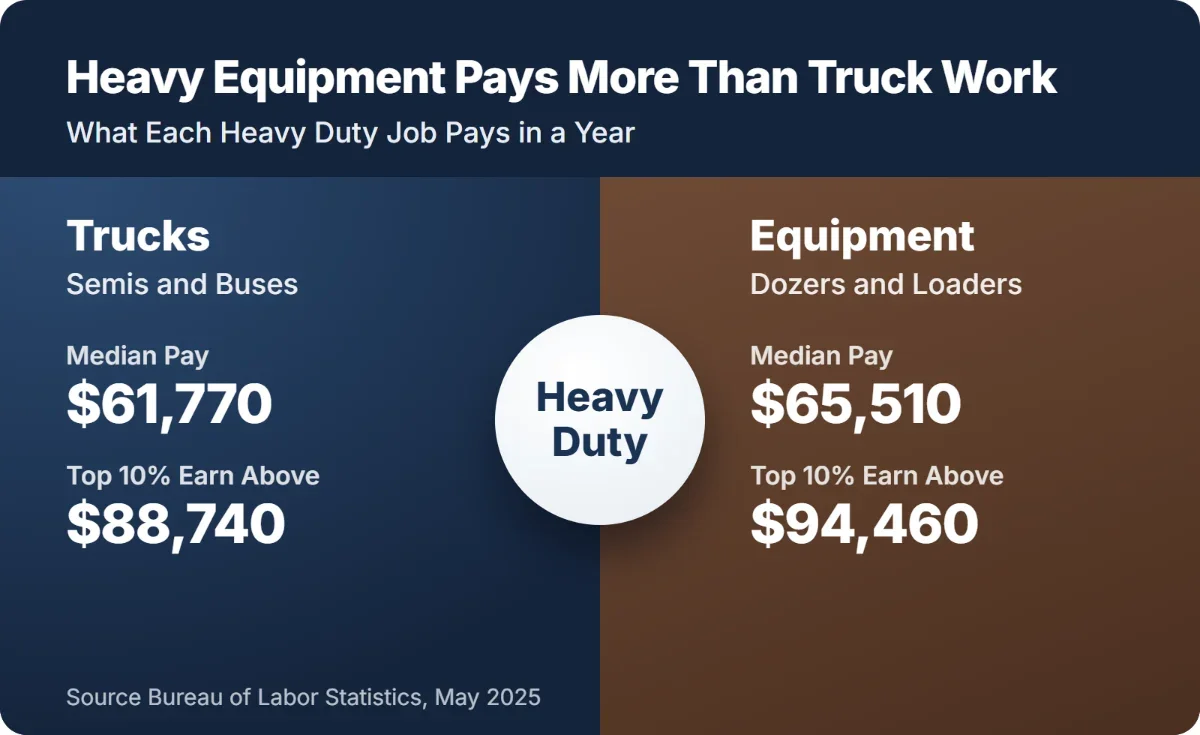
Equipment jobs pay more at each level and you should expect more travel to job sites. The heavy equipment mechanic career guide explains that side of the work. You can see posted pay on the heavy equipment mechanic salary page.
Heavy diesel mechanic and heavy duty diesel mechanic usually point to the truck side. Medium duty diesel mechanic jobs cover box trucks, delivery trucks and other trucks smaller than a semi. You use the same engine, brake and electrical skills on lighter parts.
What Does a Heavy Duty Mechanic Do on the Job?
You find what is wrong, fix it and prove it works before the machine goes back out. Most days include some of this work:
Scheduled Service - You clean, grease and change fluids on a set schedule.
Diagnosis - You connect a laptop or scan tool to find the fault.
Major Repairs - You overhaul engines, transmissions and hydraulic systems.
Field Calls - You drive to the job site when a crane or dozer is too big to haul back to the shop.
Service Records - You log what you found, what you replaced and the hours you spent.
Most heavy duty work still happens indoors. The Bureau of Labor Statistics says service technicians "usually work indoors in noisy repair shops." Field jobs move you outside in every kind of weather.
Which Job Should You Pick?
Pick trucks if you want a shop schedule and plenty of openings near home. Pick equipment if you want higher pay and do not mind mud, weather and long drives.
Your location may settle the question for you. Mining and construction regions have more equipment work and freight corridors have more truck work. You can compare pay in the diesel mechanic salary by state guide and the heavy equipment mechanic salary guide.
How Do You Get Into Heavy Duty Work?
You can get in through a trainee job, a trade school or a dealer program. A dealer program pays you during shop rotations and often covers tuition. The diesel apprenticeship guide explains how those programs work.
Some Operating Engineers union locals run paid apprenticeships for heavy equipment technicians. Union technicians repair machines on job sites and in contractor shops. Ask the local hall in your area whether it runs a technician program.
Start on trucks if you cannot find an equipment opening near you. Your engine and electrical skills transfer and you can add hydraulics later. The diesel technician trainee jobs page lists employers that hire beginners.
DieselTechWork earns a commission on some links in this post at no extra cost to you.
What Should You Check in a Job Posting?
Read the equipment list first, then ask these questions before you apply:
Shop or Field - Ask how many days a week you would spend on the road.
Tools - Ask which tools you bring and which the company supplies.
Pay Plan - Ask whether you get paid for your travel time.
Training - Ask whether the company sends you to factory classes.
Bigger shops supply the expensive scan tools and a mobile mechanic usually buys one. Diesel Laptops sells diagnostic tools for trucks and equipment. The diesel mechanic tools list shows when that purchase makes sense for you.
Browse open heavy equipment mechanic jobs →
Get weekly diesel jobs and salary data delivered to your inbox → Subscribe here
Frequently Asked Questions
Is a Heavy Duty Mechanic the Same as a Diesel Mechanic?
Often yes, when the job involves trucks. A heavy duty mechanic on bulldozers falls under a different federal job category. You can ask the recruiter which equipment you would service.
Do Heavy Duty Mechanics Need a CDL?
Some do when they drive a large service truck to job sites. You may not need one in a shop role. The CDL guide for diesel mechanics explains when employers ask for it.
Do Heavy Duty Mechanics Work Weekends?
Yes, many do. Federal job data shows many heavy vehicle and equipment technicians work evenings and weekends. Construction and mining crews run long shifts and want broken machines fixed before the next one starts. Ask about the shift schedule and weekend call rotation before you accept.
Is Heavy Duty Work Harder Than Car Repair?
Yes, the parts are heavier and the work can take you outdoors. You also earn more for it at the median. The fleet mechanic jobs page shows steadier shop roles if you want less field work.
Last updated November 2026.